Energy Alberta cares deeply about environmental stewardship – it is guiding how we plan and develop the Peace River Nuclear Power Project. We are committed to safeguarding the Peace River watershed through rigorous environmental protections and responsible water management. As one of Alberta’s most important river systems, the Peace River and surrounding ecosystems will be subject to extensive study, ongoing monitoring and strict regulatory oversight to help safeguard water quality, habitat, wildlife and the health of nearby communities.
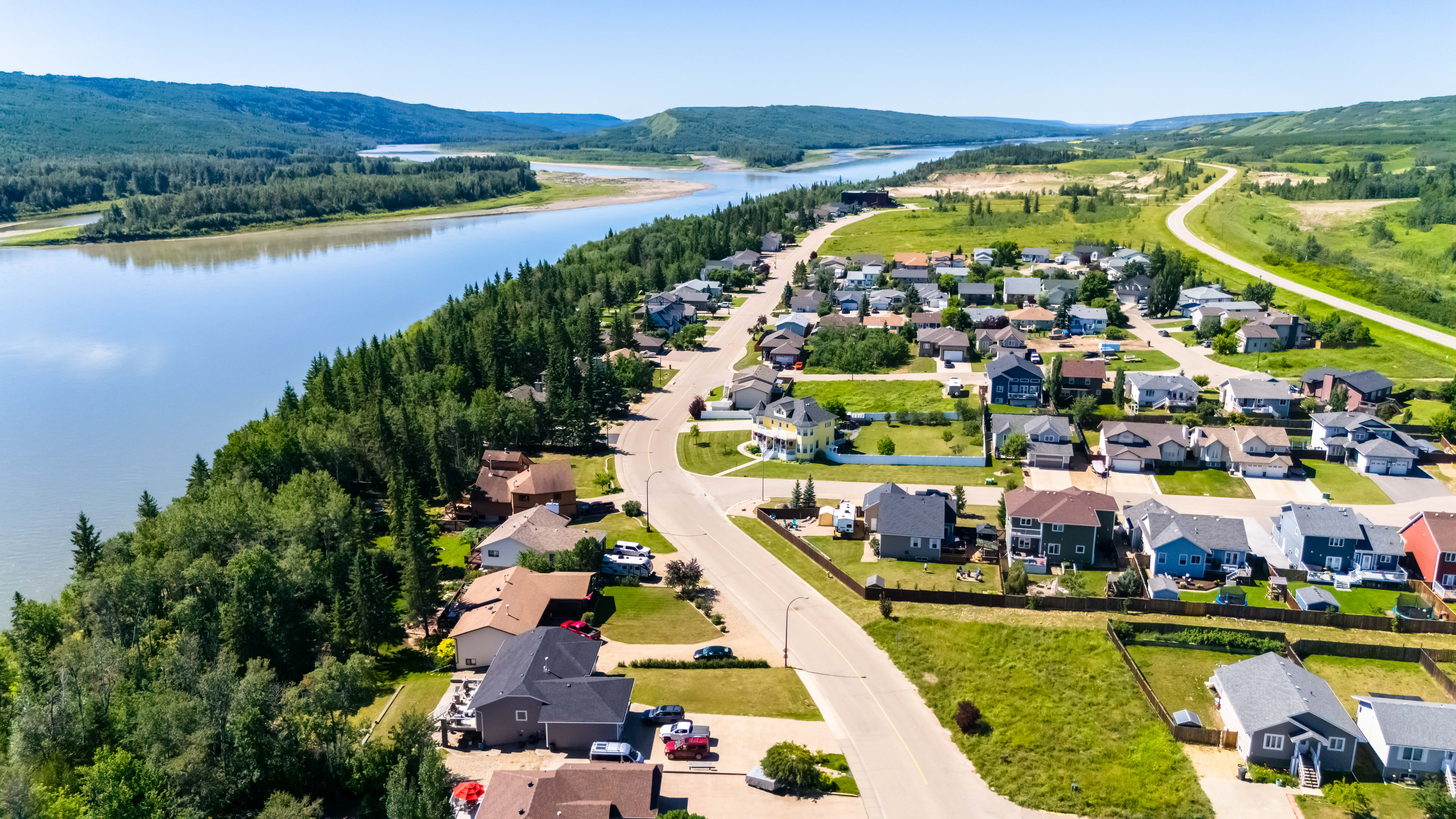

Energy Alberta is undertaking comprehensive environmental field studies, geotechnical investigations and other research to support Project planning. These studies are helping build a detailed understanding of the local environment, geology, water, wildlife and surrounding communities, while also incorporating Indigenous Knowledge and perspectives into the process. The information collected will help inform the Impact Statement for the federal review and other regulatory applications, mitigation measures and long-term environmental monitoring plans to support responsible Project planning and environmental stewardship.
Selecting the right location for the Peace River Nuclear Power Project involves a detailed and rigorous evaluation process designed to prioritize safety, environmental stewardship and responsible long-term planning. Energy Alberta has completed extensive regional and local assessments to identify and review potential sites based on technical, environmental, social, cultural and safety considerations, including criteria established through Canadian Nuclear Safety Commission requirements. We have identified potential locations that minimize environmental disturbance, support safe and reliable operations and allow for strong mitigation and risk management measures to help protect people, communities and the environment.
Learn more about site selection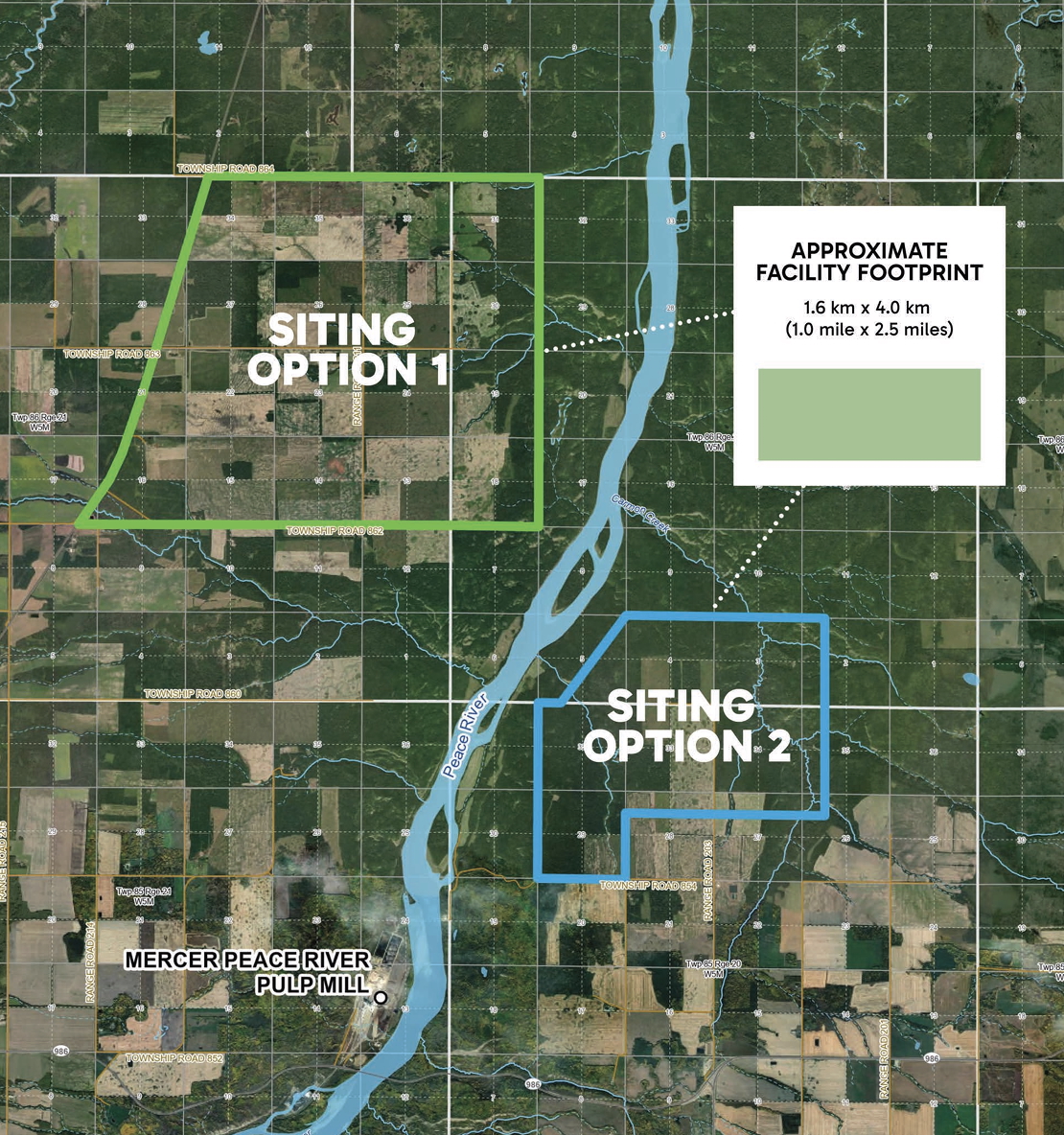

The Peace River Nuclear Power Project could generate up to 4,800 megawatts of electricity - representing a significant source of reliable, low-emission energy for the province and Western Canada.
One of the key advantages of nuclear energy is its ability to produce massive amounts of electricity while using far less land than many other forms of energy generation. In fact, nuclear power is among the most land-efficient sources of clean electricity in the world.
On average, nuclear energy requires about 103 acres of land per million megawatt-hours of electricity produced, compared to approximately 3,200 acres for solar and 17,800 acres for wind generation. This efficiency helps reduce overall land disturbance while supporting growing electricity demand, long-term energy reliability and lower greenhouse gas emissions.

For Energy Alberta, protecting water isn’t just a requirement - it’s a responsibility. The Project is being designed to use advanced cooling and water recycling technology to reduce overall water demand while supporting safe and reliable operations.
Even with all four reactor units operating, the facility would use approximately 0.2% of the Peace River’s median annual flow to replace water lost through evaporation in the cooling process. Water use and environmental protection measures would be subject to rigorous local, provincial and federal regulations, permits and monitoring programs designed to safeguard water quality, aquatic habitat, wildlife and the long-term health of the surrounding environment.
Water from the Peace River will play an important role in supporting the Project, primarily through the steam-cycle cooling process used to generate electricity. Modern nuclear facilities use multiple separate water systems that safely transfer heat, create steam and cool equipment, while ensuring reactor water doesn’t mix with the surrounding environment. Heat will be transferred through sealed pipes and barriers, and no heated water will be discharged back into the Peace River.

The Project is currently considering the use of a mechanical draft cooling system, which reduces the amount of water withdrawn from the Peace River and prevents release of heated water by cooling and evaporating water through dedicated cooling infrastructure. Any water use associated with the Project would require approvals and a licence under Alberta’s Water Act, including strict conditions related to withdrawal volumes, timing, environmental protection and monitoring.
-2.jpg)
The Peace River Nuclear Power Project would build on more than 65 years of Canadian nuclear leadership by bringing world-class nuclear technology to Northwestern Alberta. The Project includes four 1000 MW-class reactors that could produce up to 4,800 megawatts of clean electricity - equivalent to roughly 15 per cent of Alberta’s current generation capacity.
Learn more about about the ProjectEnergy Alberta is committed to the safe, secure and responsible management of all conventional and nuclear waste associated with the Project. Nuclear waste in Canada is managed under rigorous regulations and oversight from the Canadian Nuclear Safety Commission and international organizations, using proven containment and storage technologies designed to protect people and the environment.
Different types of waste require different management approaches, with tailored handling, monitoring and containment systems based on their characteristics and level of radioactivity. Over time, radioactivity decreases naturally, while ongoing advances in technology and long-term storage solutions continue to strengthen safety and environmental protection measures.
.png)
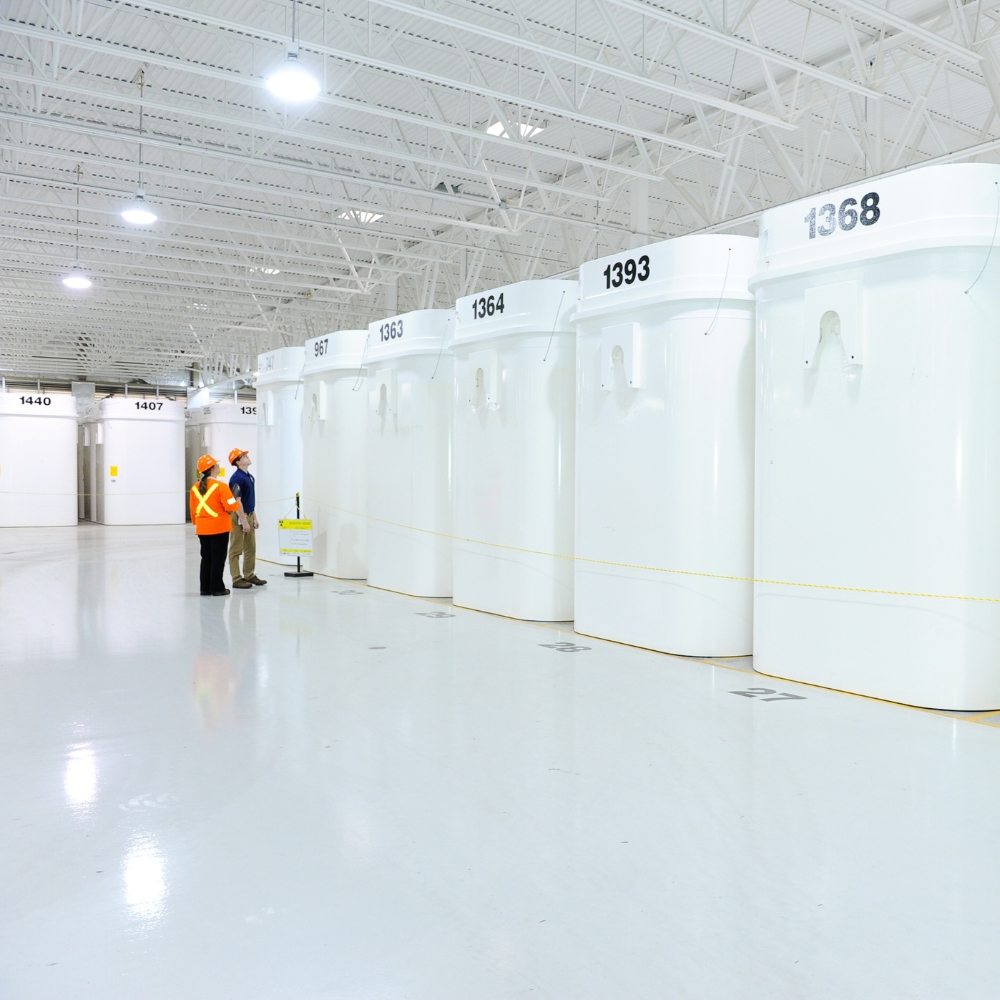
Used nuclear fuel is a byproduct of nuclear power and it must be safely managed long-term. Although its radioactivity level decreases rapidly with time, the used fuel must be contained and isolated from people and the environment, essentially indefinitely. Canada follows proven practices used globally and used fuel is first stored on-site in pools, then in dry storage using concrete cannisters before being sent to long-term disposal.
Once a used nuclear fuel bundle is removed from a reactor, it is placed in a water-filled pool where its heat and radioactivity decrease over time. After seven to 10 years, the bundle is placed in a dry storage container, a method that has been in use worldwide since the 1980s.
The Nuclear Waste Management Organization (NWMO) is the not-for-profit organization tasked with the safe, long-term management of Canada’s used nuclear fuel in a manner that protects people and the environment for generations to come. In 2024, the NWMO selected a proposed site in northwestern Ontario for Canada’s deep geological repository for used nuclear fuel, which is now undergoing an Impact Assessment. The NWMO is also beginning early planning for a second repository to manage waste, with a site selection process expected to begin around 2028.
Learn more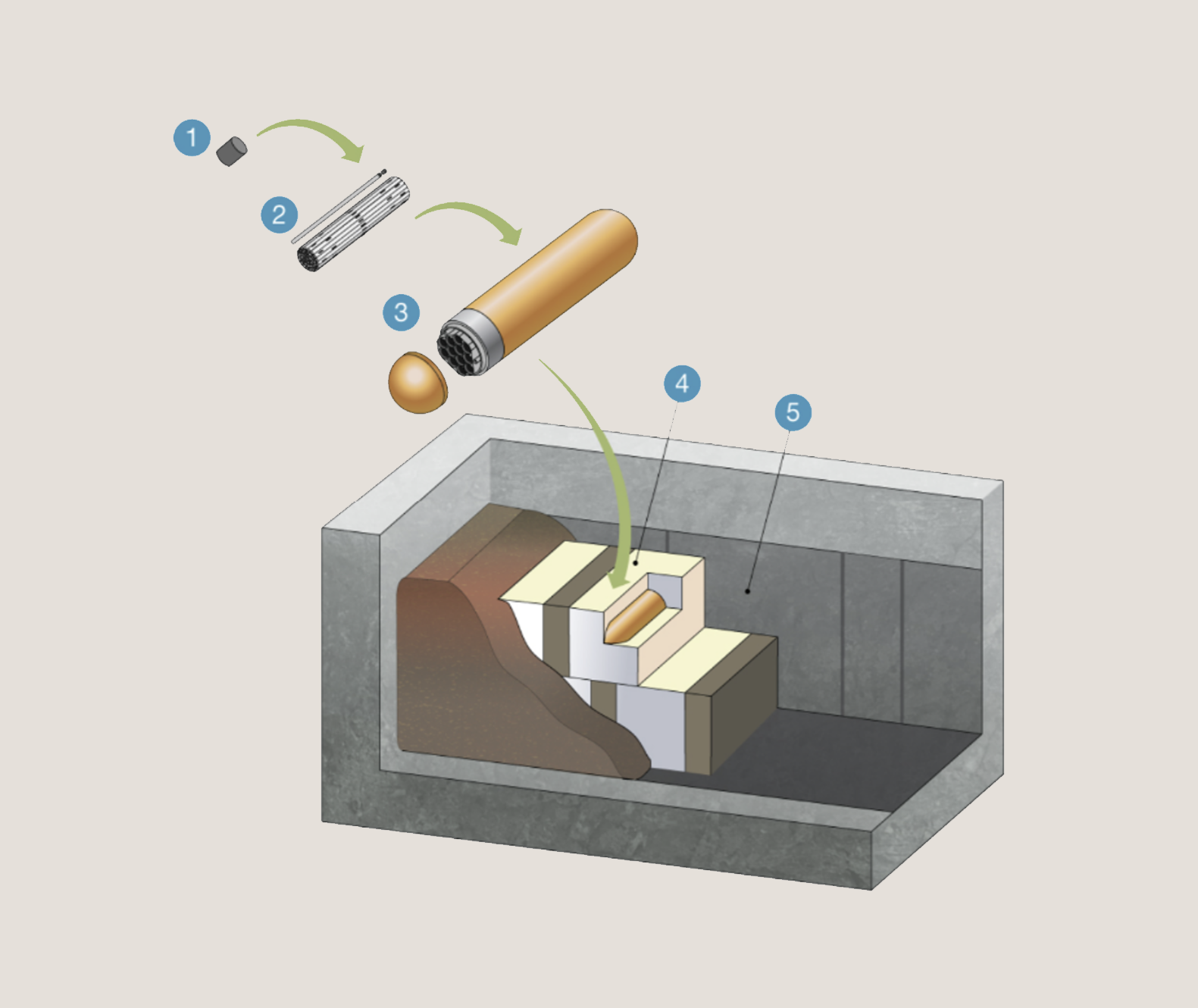
The Canadian Nuclear Safety Commission (CNSC) oversees every stage of a nuclear power plant’s life, including its safe decommissioning. Their role is to make sure decommissioning follows strict regulations that protect workers, the public and the environment, while also meeting Canada’s international commitments. Before a nuclear power plant can receive its operating license, the operator must submit a decommissioning plan that details how the plant will eventually be dismantled safely. To ensure these plans are backed by proper funding, a financial guarantee is required, allowing CNSC staff to assess how decommissioning costs will be covered when the time comes.
Learn more about the decommissioning of nuclear facilitiesOur news and updates section is your go-to source for the latest happenings, announcements and stories about Energy Alberta. Explore how we’re working to transform energy production in the province.

“If you want to build trust, you have to start by understanding the community - its history, its culture, its connection to the land and what matters to the people who call it home.” - Gaylene Whitehead
.jpg)
“Ultimately, the Peace Region has a strong foundation, and there are a number of potential economic opportunities ahead. Our role as a local media business is to continue informing the community as those opportunities, projects and decisions develop.” - Lindsay Parenteau and Jonathan Babiy
.png)
Every successful project starts with people. Long before construction plans take shape, there are conversations to have, communities to connect with, information to gather and early work to be done. As Energy Alberta advances the Peace River Nuclear Power Project, people and businesses across the Peace Region are helping make that work possible. Together, we’re building a foundation of opportunities for individuals and businesses interested in working with us.
Subscribe to receive Project updates.
We want to hear from you. Have questions, feedback or want to work with us? We’re here to help.
Get in Touch